Dali Travel Guide 2026
China’s “slow life” capital — Cangshan Mountain, Erhai Lake, Bai minority villages, and the Old Town that draws digital nomads and dreamers.
Quick Answer: Is Dali Worth Visiting?
Yes — it is China's slow-life capital, a 130 km lake you can cycle for free, and the Bai minority's cultural heartland. Here's the 10-second version:
✅ Why go
Erhai Lake — a 130 km highland lake with a flat, free ecological corridor perfect for cycling the most beautiful stretch (Caicun → Panxi S-Bend → Xizhou).
The Bai culture — tie-dye, three-course tea, Xizhou baba pastries, and white-walled villages you’ve never seen on a postcard.
The “ba shi” lifestyle — Dali is China’s slow-life capital, a haven for digital nomads and travelers who want to stop running.
⏱ How long
3 days covers Old Town + Erhai west line + Cangshan.
4 days adds the Erhai east line (Shuanglang sunset) without rushing.
5 days adds Shaxi Ancient Town — the only surviving Tea Horse Road market.
Pair with Lijiang (1.5h by train, ¥34) for the classic Yunnan route.
💰 Budget per day
| Budget | Comfort | |
|---|---|---|
| Hotel | ¥120–250 | ¥400–800 |
| Food | ¥50–80 | ¥120–200 |
| Transport | ¥30–60 | ¥200–400 |
| Total | ¥200–390 | ¥720–1,400 |
The Dali Feeling: Wind, Flower, Snow & Moon (风花雪月)
Dali has a poetic name for its four natural gifts: 风 (wind) from Xiaguan, 花 (flowers) at Shangguan, 雪 (snow) on Cangshan, 月 (moon) over Erhai. These aren’t tourist slogans — they’re a way of life. People move here to slow down. Tea houses face the lake, artists paint the clouds, and even the fish seems to drift. The Bai people have a saying: “To live in Dali is to stop chasing.”
“Erhai Lake teaches you that water can’t be rushed. You cycle its shore, drink a slow coffee, watch the clouds change shape, and somewhere between Caicun and Shuanglang you realize — you’ve stopped thinking about the next stop.”
Erhai by E-bike
Rent a scooter in Caicun, ride the flat ecological corridor along Erhai’s shore — 30 km of paved path with the lake on one side and Cangshan on the other. Stop whenever a frame looks like a postcard.
Xizhou’s Wheat Fields
The Bai villages around Xizhou feel like a different century. Green rice paddies, mustard yellows in spring, a single-track train line, and old ladies in blue headscarves selling Xizhou baba (¥5) at the corner shop.
The Indigo of Tie-Dye
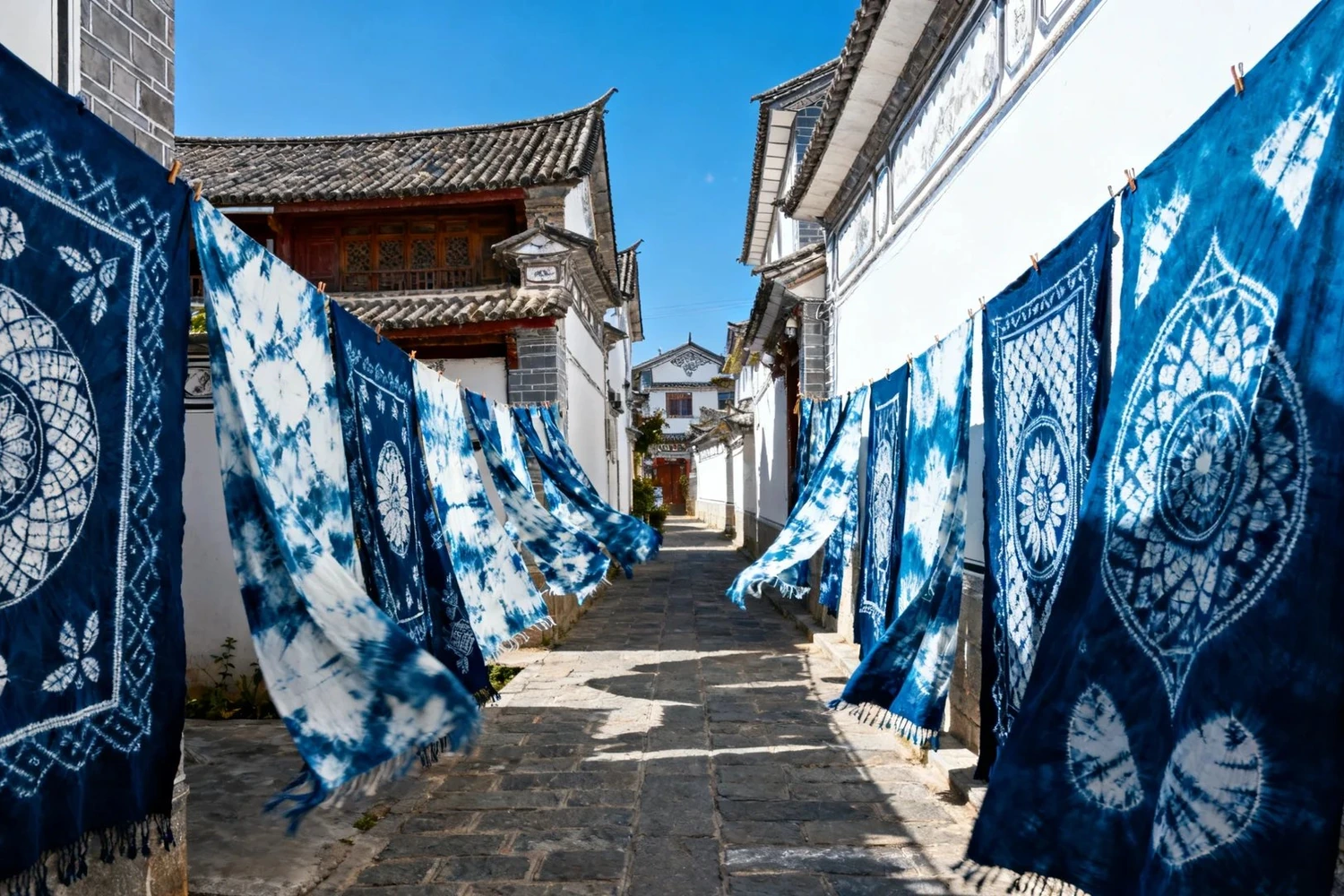
The Bai 扎染 (zaran) tradition: cloth dipped in plant indigo, sun-dried, washed, dipped again. Watch a 70-year-old grandmother pull a freshly dyed scarf from the indigo vat and you understand why blue became Dali’s color.
Three-Course Tea
The Bai 三道茶: bitter (work life), sweet (marriage), and lingering (retirement). Each is poured from a height into a bowl, with a story. An hour at a courtyard teahouse and you’ve tasted the Bai philosophy.
Shuanglang Sunset
The east shore is where Cangshan meets Erhai at the golden hour. Sit on the wall outside any sea-view guesthouse, order nothing, and watch the sun drop into the lake. You’ll forget what city you came from.
Getting to Dali (from Abroad)
Dali Fengyi Airport (DLU)
Limited but growing international routes (2026): Bangkok, Seoul, Singapore. Most international travelers connect through Kunming (KMG) (1h flight) or Lijiang (LJG) (1h flight). The airport is ~30 km east of the Old Town — airport shuttle ¥25, taxi/DiDi ¥80–120 (~40 min).
From North America / Europe / Australia: fly to Kunming (KMG) or Lijiang (LJG) and connect. DLU is small but expanding.
High-Speed Rail to Dali
Dali Station connects to Lijiang (1h 30m, ¥34), Kunming (2h, ¥145), and beyond. From Kunming South Station, multiple daily high-speed trains. The station is 30 minutes from the Old Town by taxi or scenic area shuttle.
Visa-Free Entry
Yunnan is open to travelers from 48+ countries (UK, EU, Australia, Japan, Korea, etc.) for visa-free stays up to 30 days. Kunming Changshui Airport is also a 240-hour visa-free transit port. Check our visa-free guide for your country.
The Lake Day: Cycling Erhai’s West Line
Dali’s headline experience is a 30 km ride along the free ecological corridor on Erhai’s west shore. Flat, paved, and absurdly beautiful — this is the single best half-day in Yunnan.
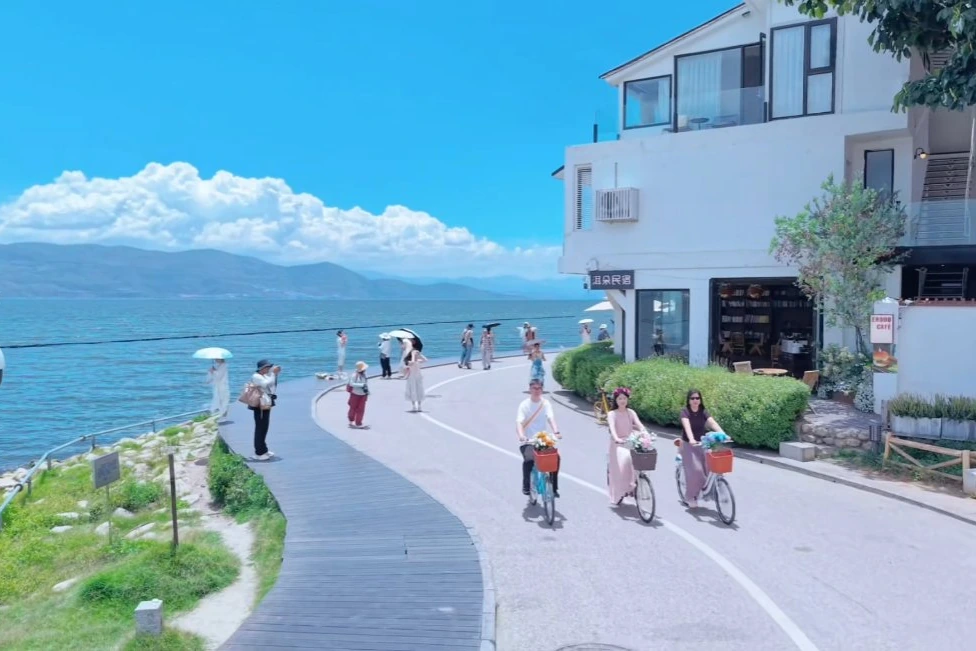
🚴 Erhai Ecological Corridor (洱海生态廊道)
Caicun → Longkan → Panxi S-Bend → Xizhou — 30 km, free, flat, beautiful
Rent an e-bike in Caicun (¥50–80/day, 80 km range) and ride the flat corridor west of the lake. The Panxi S-Bend is the most-photographed curve in Dali — arrive before 9 AM to beat the crowds. The path has cafes, rest stops, and unobstructed lake views the entire way.
Honest tips: don’t try to circle the whole 130 km lake in one day (you’ll see nothing). Rent a big-battery e-bike, not the cheap roadside ones (they die mid-route). Wear sunscreen — Yunnan UV is brutal even in spring.
⭐ Best for: Anyone. The single best half-day in Yunnan.
The East Shore: Sunset Country
The east side of Erhai is quieter, more dramatic, and where Cangshan meets the lake for the famous sunset. Rent a scooter or take a DiDi for the day.
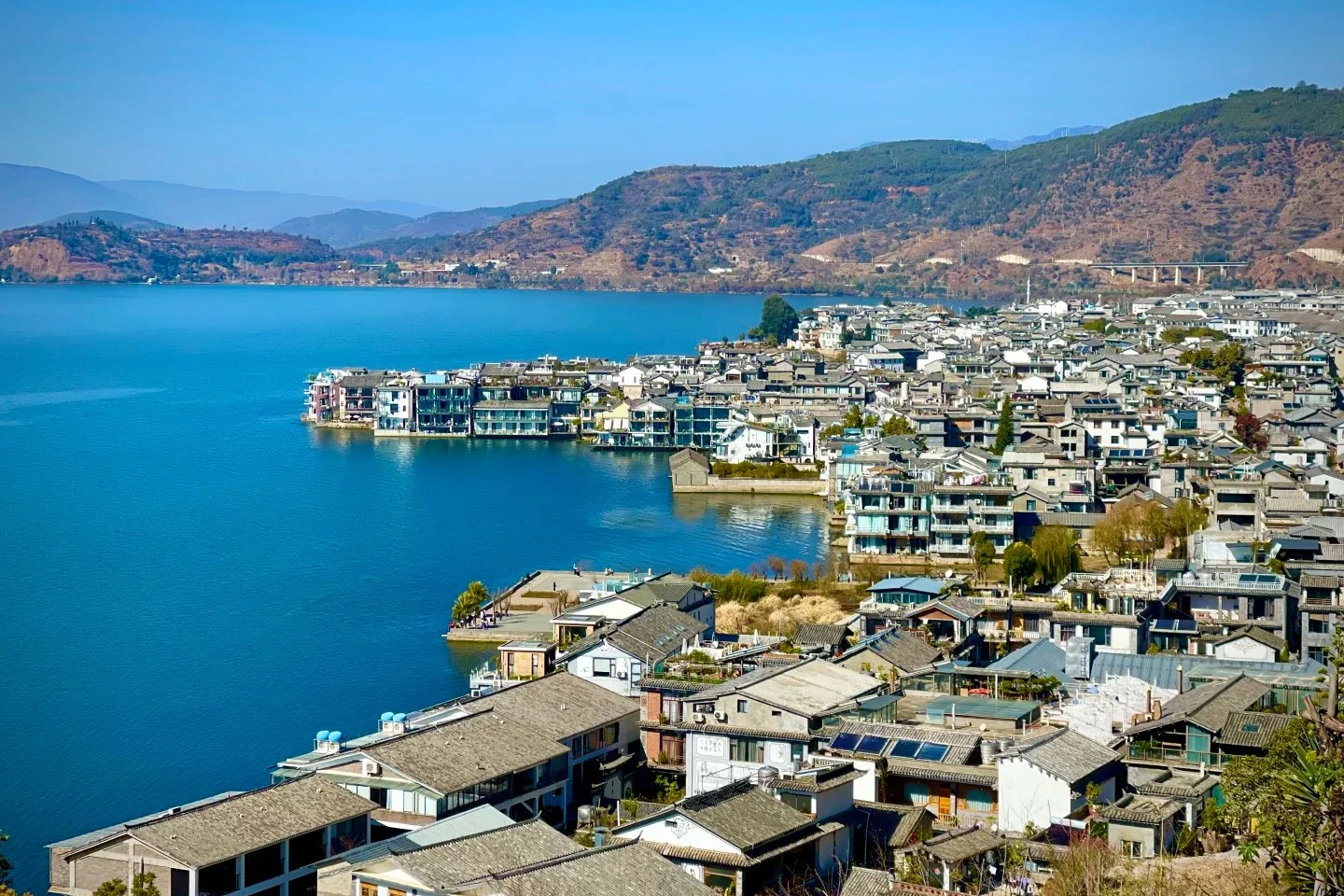
Shuanglang Ancient Town (双廊古镇)
Free entry. Once a sleepy fishing village, now a string of sea-view boutique hotels. The Sun Palace (Yang Liping’s studio) perches on a rocky outcrop into the lake. Stay overnight for the sunrise — or come for sunset and dinner on a terrace overlooking the water.
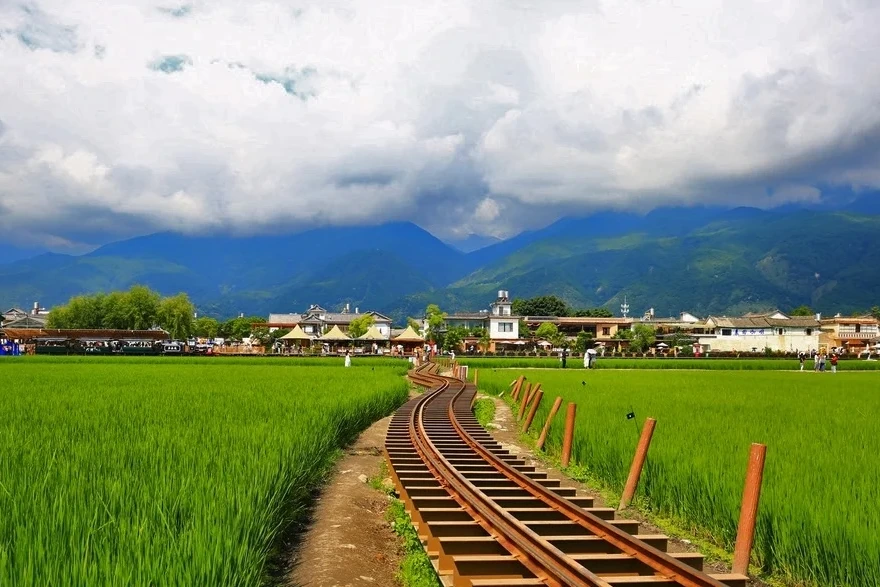
Xizhou Ancient Town (喜洲古镇)
Free (Yan Family Compound ¥20). The Bai cultural heart — the Xizhou Corner Tower (喜洲转角楼) is the iconic yellow-walled photo spot. Eat Xizhou baba (¥5) hot from the pan, try a tie-dye workshop (¥80), and walk the wheat fields out to the old railway. Quieter than Shuanglang.
Little Putuo & Wase Town
Wase Village is the east-shore sunset spot — the road into the village has open views west across the lake. Little Putuo (小普陀) is a tiny island you can reach on a causeway; in winter (Nov–Mar) it’s covered in red-beaked seagulls that gather from Siberia — one of Yunnan’s most photogenic winter scenes.
The Mountain: Cangshan’s Three Cable Cars
Cangshan is a 19-peak range rising 4,000 m above Erhai. You have three cable cars to choose from — pick by time, altitude, and budget.
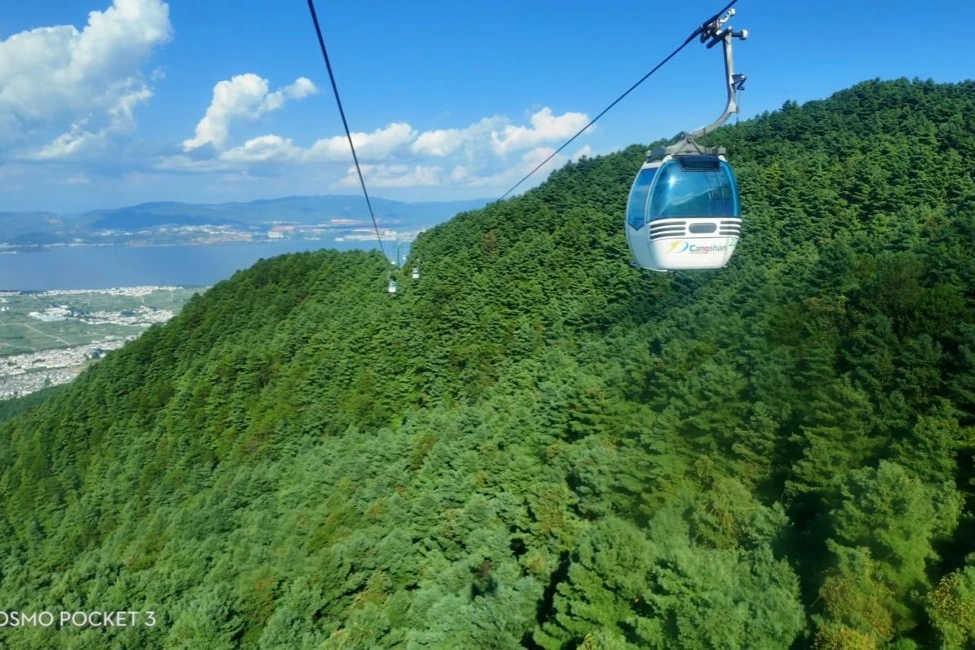
🚡 Gantong Cable Car (感通索道)
The best value — ¥110–130 round trip including the geology park ticket. Goes to Qingbixi (清碧溪) at 2,550 m, then a paved walk along the Yudai Cloud Road (玉带云游路) with lake views. Suitable for families and casual hikers.
⭐ Best for: Most travelers. The right balance of value, altitude, and scenery.
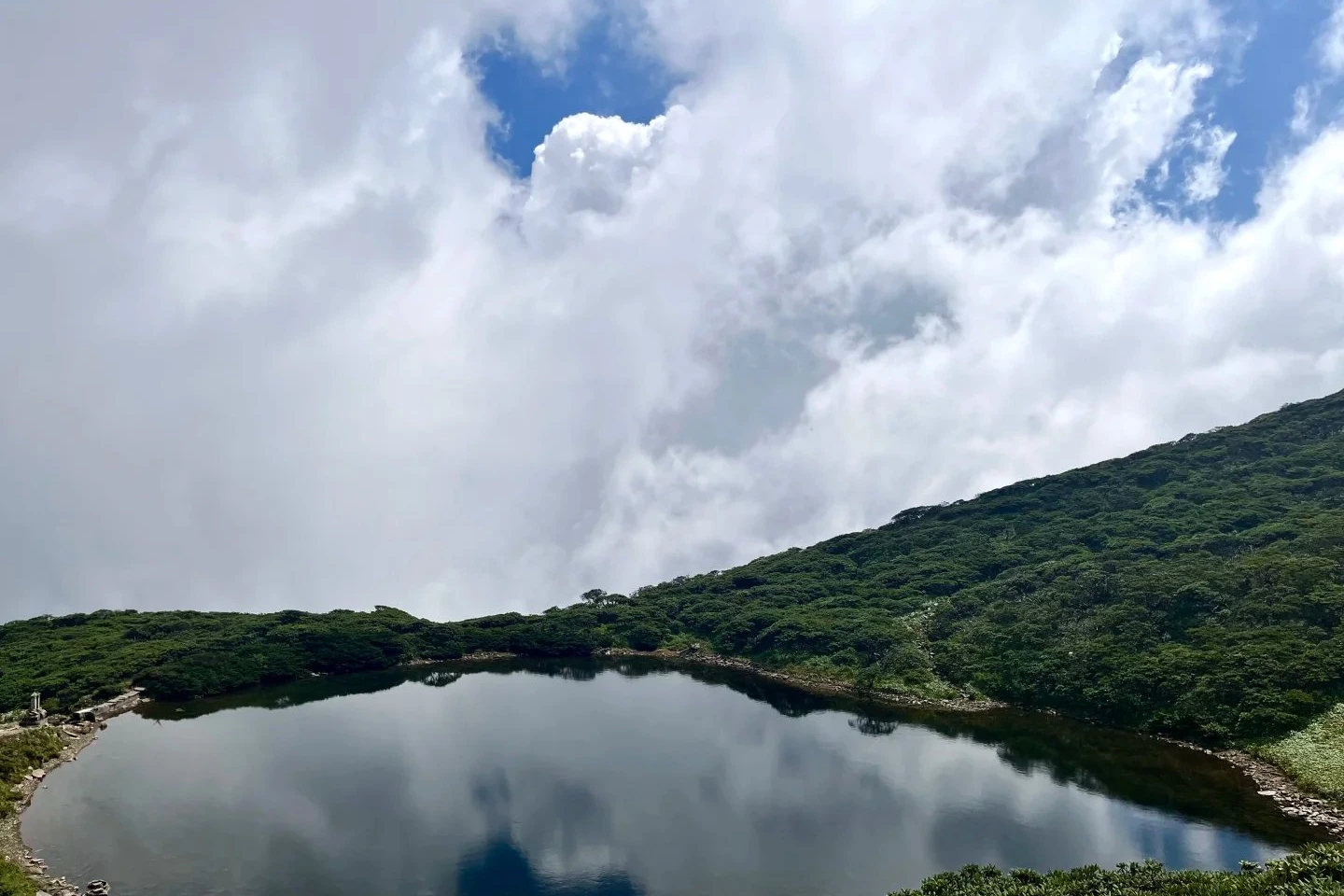
🚡 Ximatan Cable Car (洗马潭索道)
The high-altitude option — ¥182–320 round trip, climbs to 3,966 m with cloud-forest views and snow-capped peaks (snow possible even in July). Important: weather-dependent, closed in wind/rain. Confirm operation the day before. Bring a jacket — you’re at 4,000 m.
⭐ Best for: Adventure travelers on clear days. Skip in rain/fog.
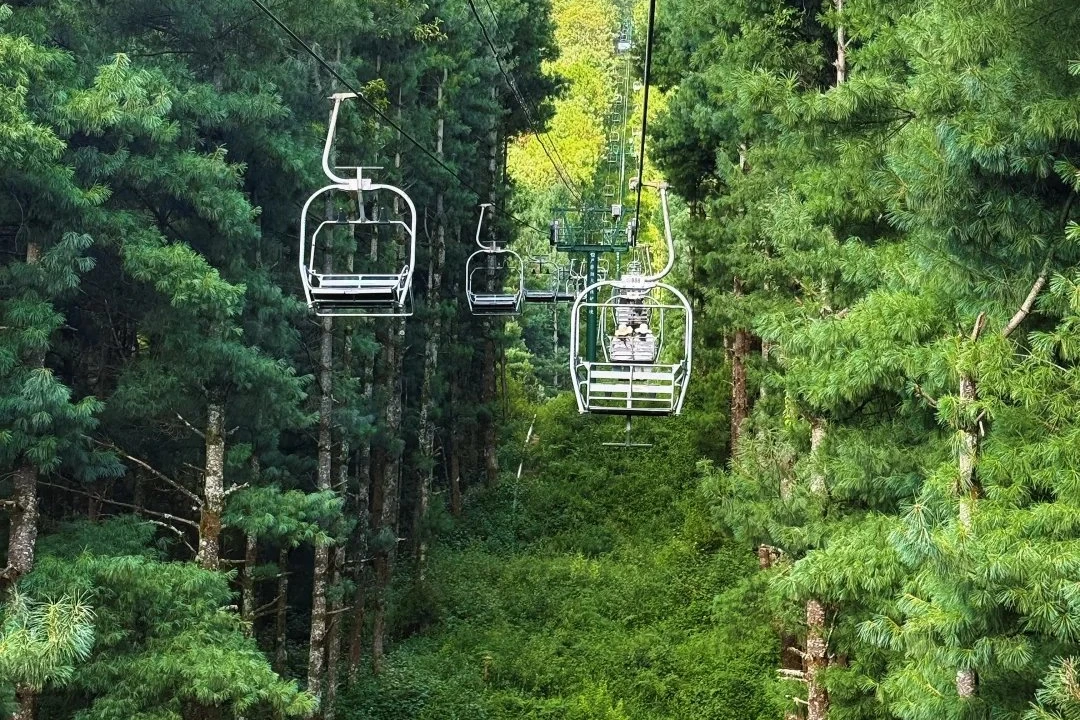
🚡 Zhonghe Cable Car (中和索道)
The shortest & easiest — ¥60 round trip, gentle route for hikers who want a mix of cable car and walking. Combined with a visit to Jizhao Nunnery (寂照庵) — the most photogenic small temple in Yunnan, famous for its flower-filled courtyard. Try the ¥20 vegetarian lunch.
⭐ Best for: Half-day nature escapes, flower lovers, slow walkers.
Old Town & Bai Culture
Dali Old Town is a 600-year-old walled city of Bai architecture, indie cafes, and craft shops. The surrounding villages are where the Bai heritage lives — quieter, older, and full of surprises.
🏯 Don’t Miss
- Renmin Road — the main pedestrian street, indie cafes and silver shops
- Five-View Tower (五华楼) — climb for sunset over the Old Town + Cangshan
- Foreigner Street — the historic lane, now craft shops & bistros
- Wenxian Lane — locals eat breakfast here (er si noodles ¥8)
🎨 Bai Cultural Workshops
- Chongsheng Temple Three Pagodas (崇圣寺三塔) — ¥73–75; the Tang-dynasty landmark opposite Cangshan
- Tie-dye workshop — ¥80 for a half-day; take home your own indigo cloth
- Three-course tea (三道茶) — ¥30–60; bitter / sweet / lingering at a courtyard teahouse
- Pioneer Bookstore (Shaxi branch) — in the Old Town, beautiful wood-frame setting
⚠️ Avoid “¥60 Erhai day tour” flyers on the main street — usually shopping tours.
Food: Bai Cuisine & the Wild Mushroom Season
🥮 Must-Try Dishes
Bai people’s everyday food — the real Yunnan
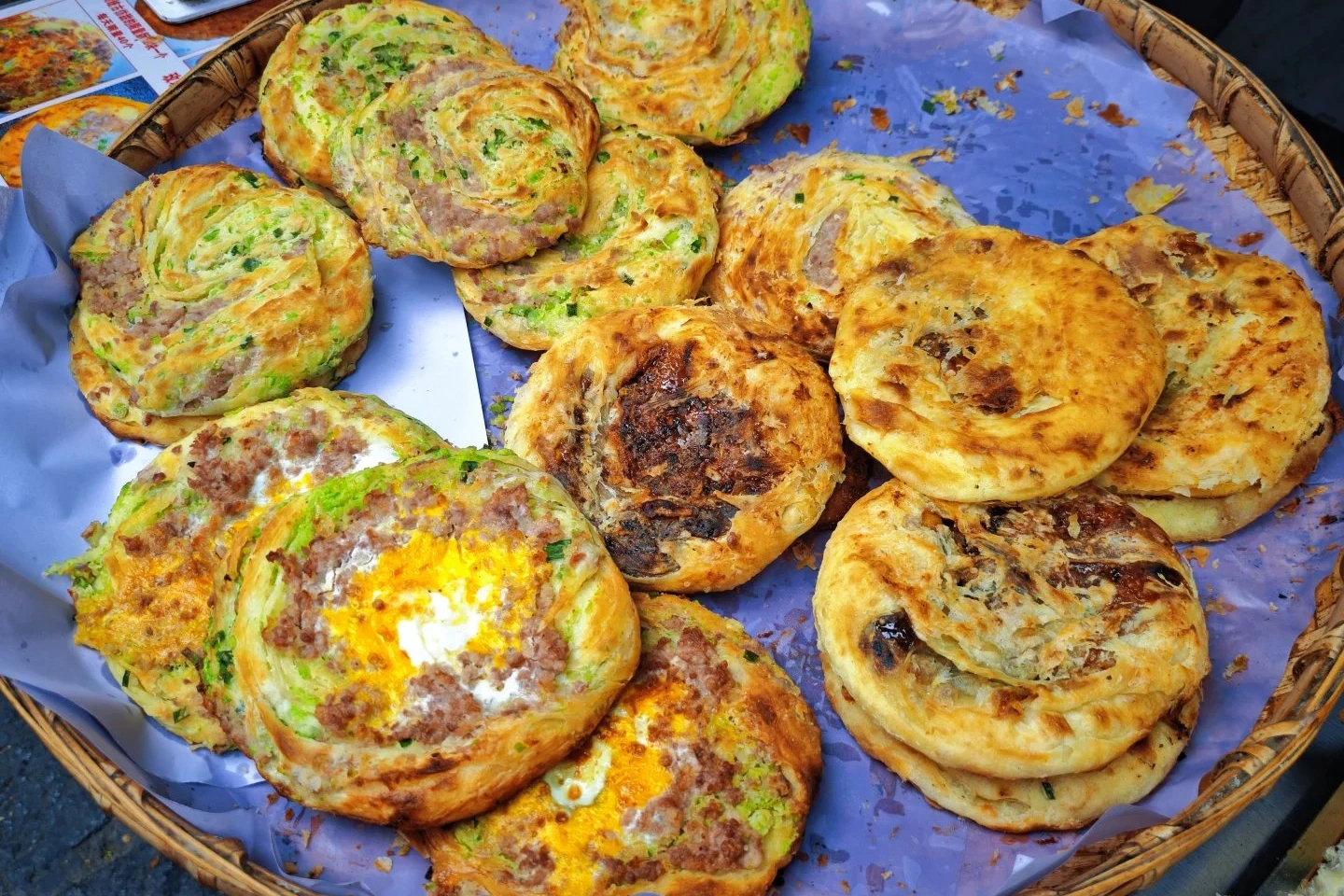
Xizhou baba (喜洲粑粑) — crispy layered flatbread, try sweet (rose) and savory (pork) — ¥5. Er si (饵丝) — Yunnan rice-noodle breakfast, ¥8–15. Rushan (乳扇) — Bai milk-cheese on a stick, grilled over coals. Sour-spicy Erhai fish — fresh lake fish in pickled chili broth, ¥80–120. Raw pork (生皮) — traditional Bai dish, adventurous eaters only.
⭐ Best for: Anyone — breakfast staples <¥15, dinner <¥80.
🍲 Wild Mushroom Hot Pot
June–October only — Yunnan’s seasonal treasure
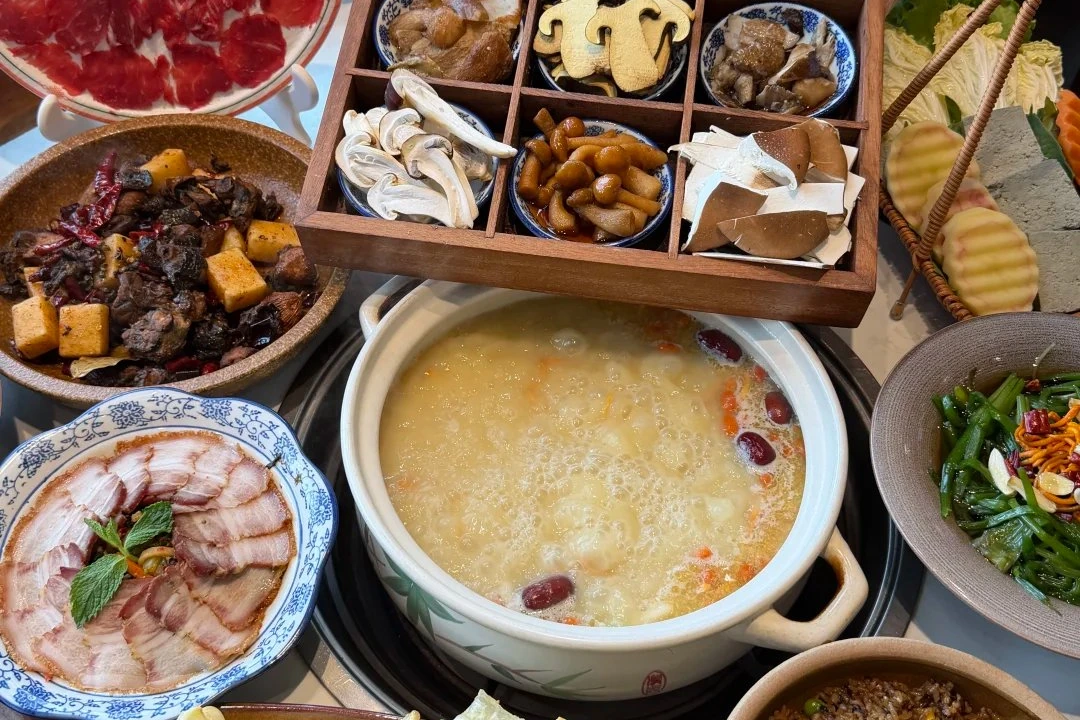
Yunnan’s wild mushroom season (June–October) brings porcini, matsutake, termite mushrooms, and dozens more. A mushroom hot pot is a communal ritual — nine-grid wooden box of fresh mushrooms, chicken broth, ¥100–180 per person. Warning: never eat mushrooms raw, and ask the restaurant which need extra cooking time.
⭐ Best for: Summer visitors. A Yunnan must-do.
Day Trips: Tea Horse Road Memories
🏯 Shaxi Ancient Town (沙溪古镇)
The only surviving Tea Horse Road market in Yunnan — the main reason to extend your Dali trip
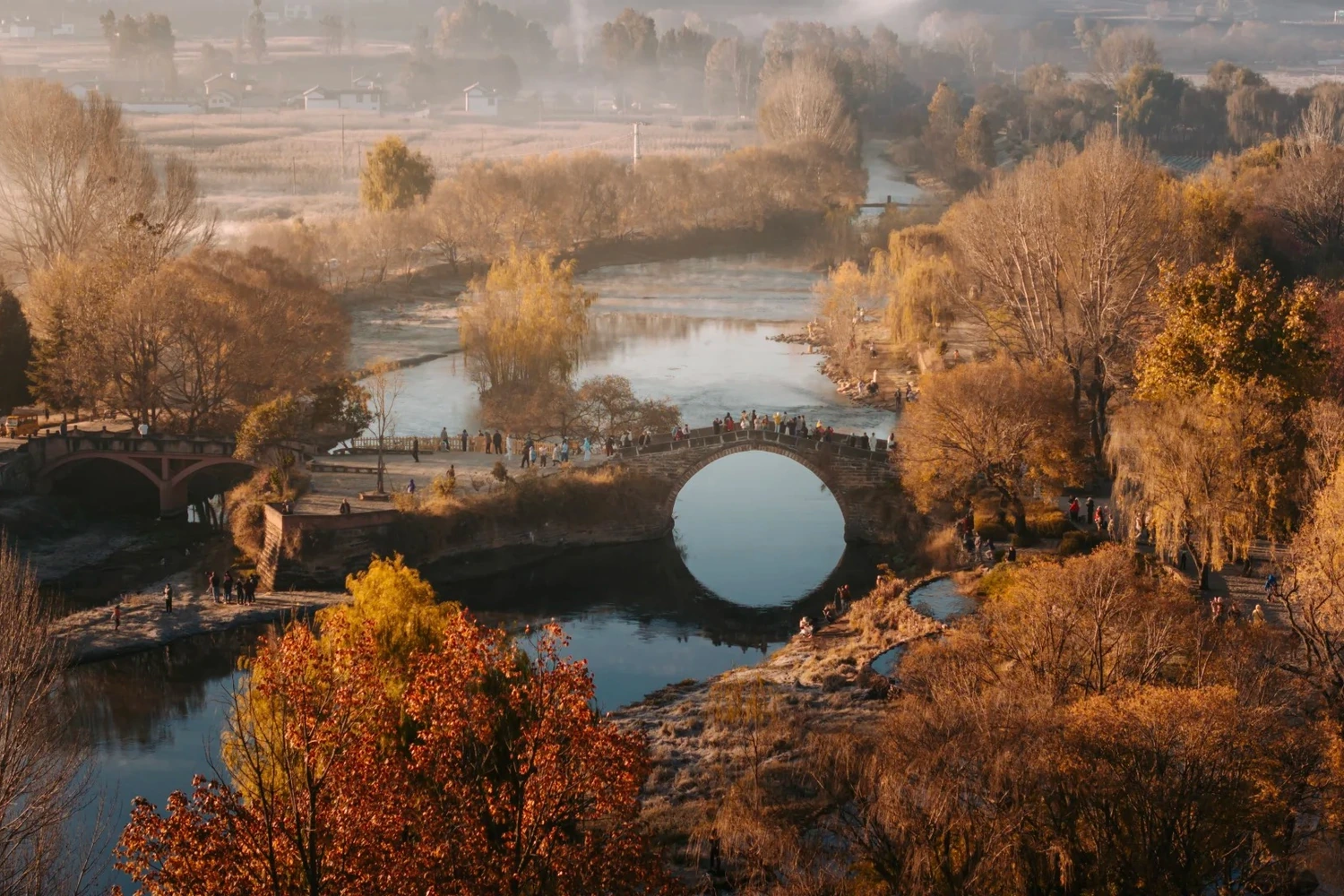
Sideng Square (寺登街) and the 400-year-old Yujin Bridge still stand — quieter than Dali Old Town or Lijiang. Shared car from Dali: 1.5 hours, ¥80–100 one way. Stay overnight in a restored Bai courtyard guesthouse for a half-day walk before the day-trippers arrive. Worth it if you have a 4th or 5th day.
⭐ Best for: Slow travelers; anyone escaping the Old Town crowds.
🚂 Jizhao Nunnery (寂照庵)
Yunnan’s most loved small temple — built into the hillside with succulents
Combine with the Zhonghe cable car (¥60) for a half-day Cangshan escape. The nunnery’s flower-filled courtyard is photogenic — the ¥20 vegetarian lunch is one of the best meals in Yunnan.
⭐ Best for: Flower lovers, slow walkers, lunch-stoppers.
🌾 Erhai Cruise (Nanzhao Style Island)
Half-day cruise for those who you’d rather not pedal
A half-day Erhai cruise (¥150) to Nanzhao Style Island with Taihu stone gardens and the reconstructed Nanzhao Palace. Less authentic than riding the corridor, but easier — and you get the lake view from the water itself.
⭐ Best for: Less mobile travelers; rainy days.
Dali Through the Seasons
Yunnan’s altitude means Dali is mild year-round — but when you go changes what you see:
Spring (Mar–May)
Mild 15–25°C, Xizhou wheat fields turn golden-green, flowers bloom. The classic season — perfect for cycling and outdoor cafes.
Summer (Jun–Aug)
Wet season (rain mostly at night), 20–28°C. Mushroom hot pot peak — the must-eat dish is in season. Avoid the late-July crowds.
Autumn (Sep–Nov)
Crisp blue skies, golden rice paddies. The second best season — clear views of snow-capped Cangshan. Avoid Golden Week (Oct 1–7): prices double.
Winter (Dec–Feb)
Cool 5–15°C, fewer tourists, cheaper hotels. Seagull season at Little Putuo (red-beaked gulls from Siberia, Nov–Mar) — the most photogenic winter scene in Yunnan.
Practical Information
🏨 Where to Stay
- Dali Old Town — walk to Renmin Road and Five-View Tower, ¥180–350/night
- Caicun Wharf — sea-view windows facing Cangshan, ¥260–500/night
- Shuanglang — lake-view boutique hotels (the best sunset seats), ¥400–1,000+/night
🚕 Getting Around
- E-bike rental — ¥50–80/day in Caicun or Xizhou, the best way to explore Erhai
- DiDi — works citywide; reliable between Old Town and the lake
- Private car charter — ¥260–400/day for Erhai loop with driver (recommended for east shore)
- Airport shuttle — ¥25 to Old Town (~70 min); taxi ¥80–120
💳 Money & Connectivity
- Payments: Alipay and WeChat Pay dominate; foreign cards link via both apps. Carry ¥200–400 cash for village stalls.
- Internet: Google/Instagram/Whats are blocked — buy an international eSIM before you land. See our eSIM guide.
- Language: English is limited outside the Old Town; carry your guesthouse name in Chinese (大理古城 / 才村码头).
🗓️ Best Time to Visit
- Spring (Mar–May) & Autumn (Sep–Nov): the two sweet spots — mild 15–25°C, ideal for cycling and Erhai sunsets.
- Winter (Dec–Feb): cool 5–15°C, fewer tourists, cheaper hotels — and the seagull migration begins.
- Avoid: Chinese New Year (late Jan / early Feb) and Golden Week (Oct 1–7) — prices double and crowds swell.
Frequently Asked Questions
How many days do I need in Dali?
3 days is perfect for Old Town + Erhai west line + Cangshan. 4 days adds the Erhai east line (Shuanglang sunset). 5 days adds Shaxi Ancient Town — the only surviving Tea Horse Road market. Pair with Lijiang (1.5h by train, ¥34) for a classic Yunnan route.
What is the best time to visit Dali?
Spring (Mar–May) and Autumn (Sep–Nov) are the two sweet spots — mild 15–25°C, ideal for cycling and Erhai sunsets. Avoid Chinese New Year and Golden Week (Oct 1–7) when prices double.
How do I get from Lijiang to Dali?
High-speed rail from Lijiang Station to Dali Station takes 1h 30m, ¥34 second-class, with multiple daily departures. It is the fastest, cheapest, and most scenic route.
Can I cycle around the whole of Erhai Lake?
You can, but the full loop is 130 km and you’ll see very little. The smart way is to split: ride the west shore on Day 2 (Caicun → Panxi S-Bend → Xizhou), and rent a scooter or charter a car for the east shore (Shuanglang sunset) on Day 4.
Which Cangshan cable car should I take?
For most travelers: Gantong (感通) at ¥110–130 round trip — best value, includes the geology park and Yudai Cloud Road walk. For high-altitude views: Ximatan (洗马潭) at ¥182–320, but it’s closed in rain/wind. For a short walk + Jizhao Nunnery: Zhonghe (中和) at ¥60.
Do I need a visa for Dali?
Probably not. Travelers from 48+ countries (UK, EU, Australia, Japan, Korea) can stay visa-free for up to 30 days. Kunming Changshui Airport is also a 240-hour visa-free transit port. Check our visa-free guide for your country.
Is Shaxi Ancient Town worth a day trip?
Yes — it is the only surviving Tea Horse Road market in Yunnan, far quieter than Dali or Lijiang Old Town. Shared car from Dali is 1.5h, ¥80–100 one way. Stay overnight for a half-day walk before day-trippers arrive.
Is Dali safe for tourists?
Very safe — violent crime is almost non-existent. The biggest annoyances are aggressive e-bike rental scams (always check brakes/battery and sign an agreement) and overpriced day tours on the main street (skip the ¥60 flyers — book direct).
About This Guide & Data Sources
Last updated: August 19, 2026.
Sources: Ticket prices and opening hours compiled from official scenic-area pages and Ctrip/Trip.com listings (August 2026); the Cangshan cable-car prices verified against the official Cangshan Scenic Area website; Erhai ecological-corridor access and rules from the Dali City Tourism Bureau (verified August 2026).
Disclaimer: Prices change frequently and vary by season — always confirm at the official booking platform. The Chongsheng Temple Three Pagodas and most cable cars accept on-site payment, but the higher-tier Ximatan cable car is best booked one day ahead.
Book Dali tickets on Klook →