Why Visit Dali?
Dali sits in the northwest corner of Yunnan, where the 19 peaks of Cangshan Mountain rise straight out of the western shore of Erhai — a 130 km-highland lake the color of a Bolivian salt flat at dawn. Together they form one of China's most beautiful lake-and-mountain pairings, and the Bai minority who have lived here for over a thousand years gave the place its poetic nickname: 风花雪月 (wind, flower, snow, and moon).
But Dali is not just a pretty view. It is China's slow-life capital — a haven for backpackers, artists, and digital nomads who come for the crisp air, the flat bike paths along the lake, and a pace of life that makes you forget to check your phone. You can cycle the lake for free, learn indigo tie-dye from a 70-year-old grandmother, drink bitter-sweet Bai three-course tea in a courtyard, and watch the sun drop into Erhai from a wall in Shuanglang. As one Bai saying goes: "To live in Dali is to stop chasing."
This itinerary covers the best of Dali in 3 days, with options to extend to 5. It pairs naturally with Lijiang (1.5 hours by train) and other Yunnan destinations. For a custom plan, try our AI trip planner.
Best Time to Visit Dali
Dali has a mild, sunny highland climate with four distinct personalities:
| Season | Months | Weather | Why Go / What to Watch |
|---|---|---|---|
| Spring | Mar–May | 15–25°C, wildflowers | 🌸 The classic season. Xizhou's wheat fields turn gold-green, the air is soft, and it is perfect for lakeside cycling. |
| Summer | Jun–Aug | 20–28°C, afternoon rain | ☀️ Wet season (rain mostly at night). Peak for wild-mushroom hot pot. Avoid late-July domestic crowds. |
| Autumn | Sep–Nov | 15–25°C, clear blue skies | 🍂 The second-best season. Crisp views of snow-capped Cangshan. Avoid Golden Week (Oct 1–7): prices double. |
| Winter | Dec–Feb | 5–15°C, dry | ❄️ Fewer tourists, cheaper hotels, and seagull season at Little Putuo (red-beaked gulls from Siberia, Nov–Mar). |
Recommended: Visit in March–May or September–November. Avoid Chinese New Year and the October Golden Week, when domestic tourism surges and hotels triple their rates.
Where to Stay in Dali
Dali's attractions spread along the western shore of Erhai, so where you stay shapes your days. The three main bases:
| Area | Vibe | Best For | Price / Night |
|---|---|---|---|
| Dali Ancient Town (古城) | Lively, walkable, cafes and bars | First-time visitors, nightlife, easy transport | $17–110 (¥120–800) |
| Xizhou (喜洲) | Quiet Bai villages, wheat fields | Culture lovers, photographers, slow mornings | $20–80 (¥140–560) |
| Shuanglang (双廊) | Lakefront, sunset-facing guesthouses | Couples, sunset chasers, a relaxed Day 3 | $30–150 (¥200–1,000+) |
My recommendation: Stay in or just outside the Dali Ancient Town for your first visit. You will be within walking distance of the South Gate, Foreigner Street, and the bus to the Three Pagodas, with easy access to e-bike rentals for the lake. Budget guesthouses run $17–35 (¥120–250) a night; comfortable lakeside boutiques $55–110 (¥400–800).
Getting Around Dali
- E-bike & bike (the best way on the lake): The Erhai west ecological corridor is ~46 km of car-free, lakeside path. Shared bikes cost about $0.50 (¥3–4) per 30 minutes; village daily bikes about $1.50 (¥10) all day. Corridor e-bikes run $2–3 (¥15–20) per 30 minutes. A hop-on sightseeing bus costs $1.50 (¥10) per stop, $6 (¥40) for the full route, or $8 (¥60) round trip.
- DiDi (滴滴): China's ride-hailing app. Short trips in town are $2–4. Link it to Alipay or WeChat Pay; most drivers don't speak English, so keep your destination in Chinese characters on your phone.
- High-speed rail: Dali Station connects to Lijiang (1.5 h, $5 / ¥34) and Kunming (2 h, $20 / ¥145). The station is 30 minutes from the Ancient Town by taxi or shuttle. See our China high-speed rail guide.
- Air: Dali Fengyi Airport (DLU) has growing international routes (Bangkok, Seoul, Singapore) plus connections via Kunming or Lijiang. The airport shuttle is $3.50 (¥25); a taxi or DiDi to the Ancient Town runs $11–17 (¥80–120), about 40 minutes.
Day 1: Erhai West Line Cycling, Xizhou & Bai Culture
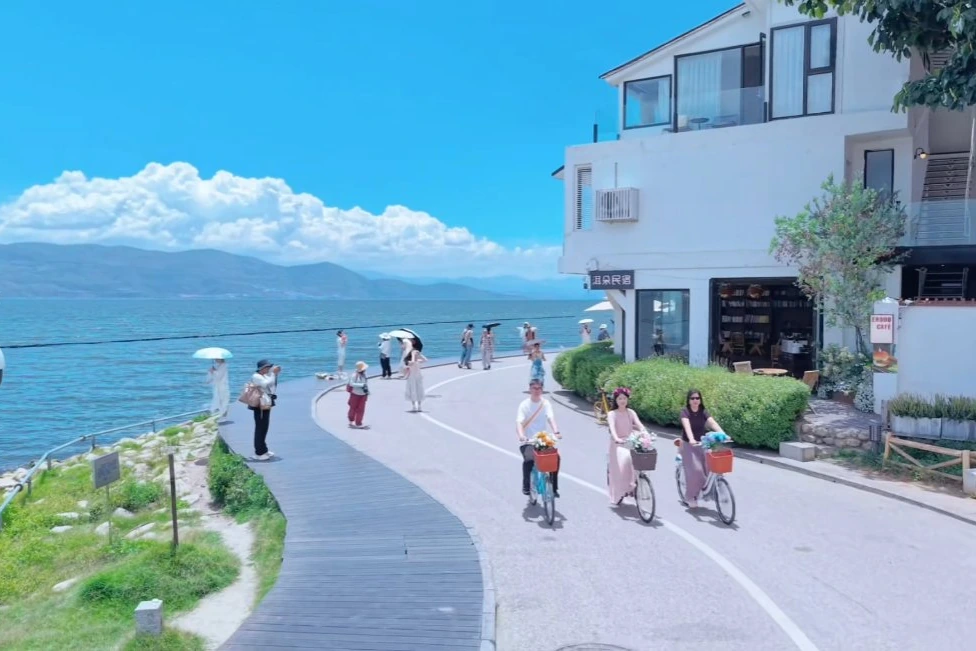
Morning (8:00 AM – 12:30 PM): Start at Caicun (才村) on the west shore and ride the flat, free ecological corridor north. The path hugs the lake with Cangshan rising on your right — stop at the famous Panxi S-Bend (磻溪S湾), the curved shoreline that floods social media, then continue to Xizhou (喜洲), about 30 km of easy, paved riding. Rent an e-bike in Caicun ($2–3 / ¥15–20 per 30 min) if you'd rather not pedal, or a daily bike for about $1.50 (¥10).
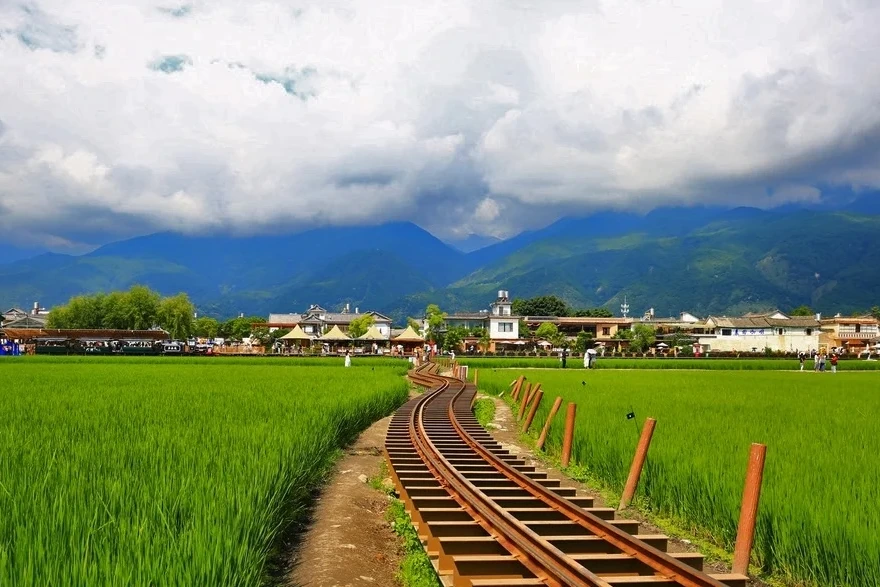
Late morning in Xizhou: This Bai village feels a century away from the tourist trail — green rice paddies, a single-track train line, and old ladies in blue headscarves selling Xizhou baba (喜洲粑粑), a flaky stuffed flatbread, for about $0.70 (¥5) at the corner bakeries. Wander the labyrinth of white-walled courtyards — the yanxi residences are the best-preserved Bai architecture in Yunnan.
Lunch (12:30 – 1:30 PM): Eat your baba with a bowl of rice noodles or a Bai set meal in Xizhou's market square. For something richer, try the local rushan (milk fan) — grilled cheese sheet on a stick.
Afternoon (2:00 – 5:00 PM): Two cultural options:
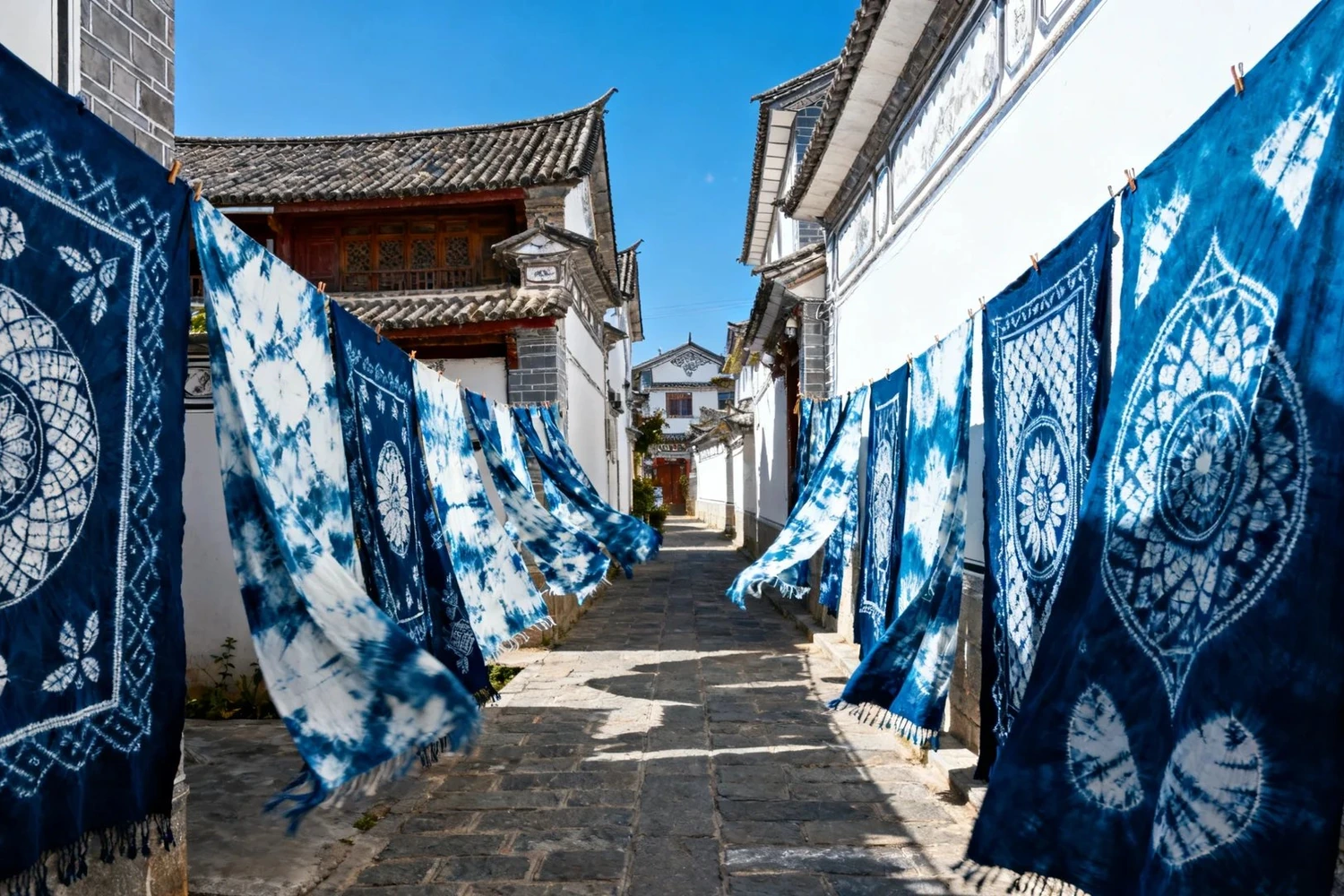
- Tie-dye in Zhoucheng (周城): A few kilometers north of Xizhou, Zhoucheng is the tie-dye capital of the Bai. Watch a grandmother dip cloth into plant indigo, then sun-dry it — you can join a short workshop and leave with your own blue scarf (about $7–14 / ¥50–100 including materials).
- Three-Course Tea (三道茶): The Bai ceremony of bitter (work), sweet (marriage), and lingering (old age) tea, poured from a height into a bowl with a story. An hour in a courtyard teahouse and you've tasted the Bai philosophy of life.
Evening: Ride or bus back to the Dali Ancient Town. Walk the lantern-lit South Gate (南门) and Foreigner Street (洋人街), grab a Yunnan craft beer, and watch the city's famous "wind" ruffle the banners. The Ancient Town is free to enter and alive until late.

Day 2: Cangshan Mountain + Ancient Town & Three Pagodas
Morning (8:00 – 10:30 AM): Visit the Chongsheng Temple and Three Pagodas (崇圣寺三塔), Dali's only 5A scenic area and its most iconic landmark — three 1,000-year-old pagodas standing in a triangle against Cangshan. Tickets are $11 (¥75); it opens at 7:30 AM and sits 1.5 km northwest of the Ancient Town (Bus 4 or 19 from the North Gate, a 20-minute walk, or a DiDi for about $2 / ¥10–20). Allow 2.5–3 hours; the Reflection Pool at dawn is the classic photo. Book via Trip.com for an English interface.

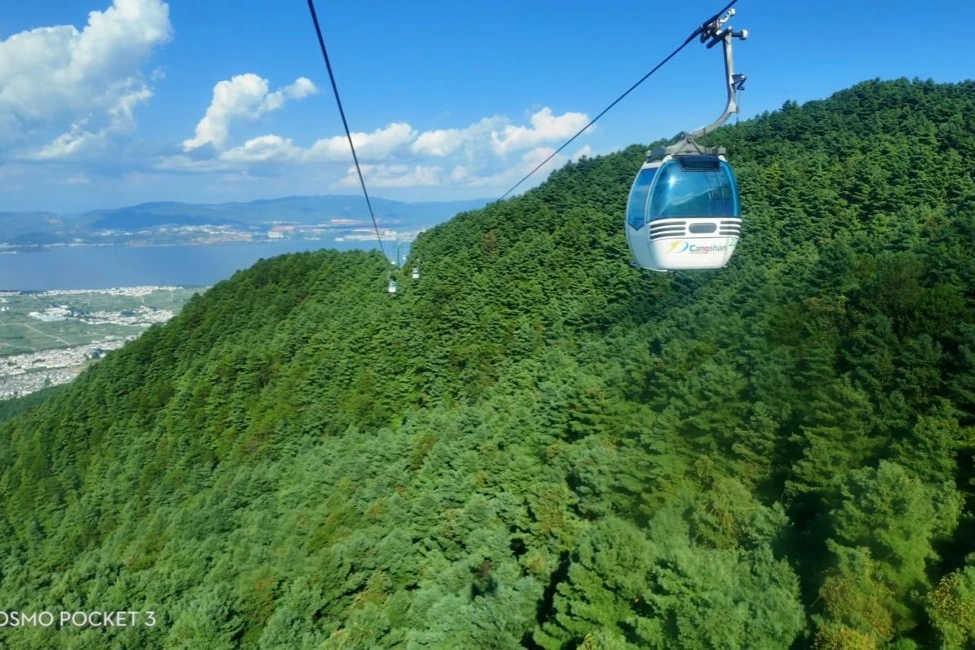
Mid-morning to afternoon (10:30 AM – 3:00 PM): Ride the Cangshan cable car. Three choices:
- Gantong (感通) — best value: $15–18 (¥110–130) round trip. Includes the geopark and the Yudai Cloud Road forest walk with valley views. Best for most visitors.
- Ximatan (洗马潭) — high drama: $25–44 (¥182–320). Reaches a 3,966 m alpine lake above the clouds. Spectacular but closes in rain or wind — check the weather first.
- Zhonghe (中和) — short & cheap: $8 (¥60). A gentle ride to a teahouse and the Jizhao Nunnery, a working temple run by nuns.
Late afternoon: Descend and wander the Ancient Town properly — the yanxi courtyards, the tie-dye alleys near the East Gate, and the small Wuhua Tower. The light turns gold around 5 PM; find a rooftop cafe for a Cangshan-and-Erhai view.
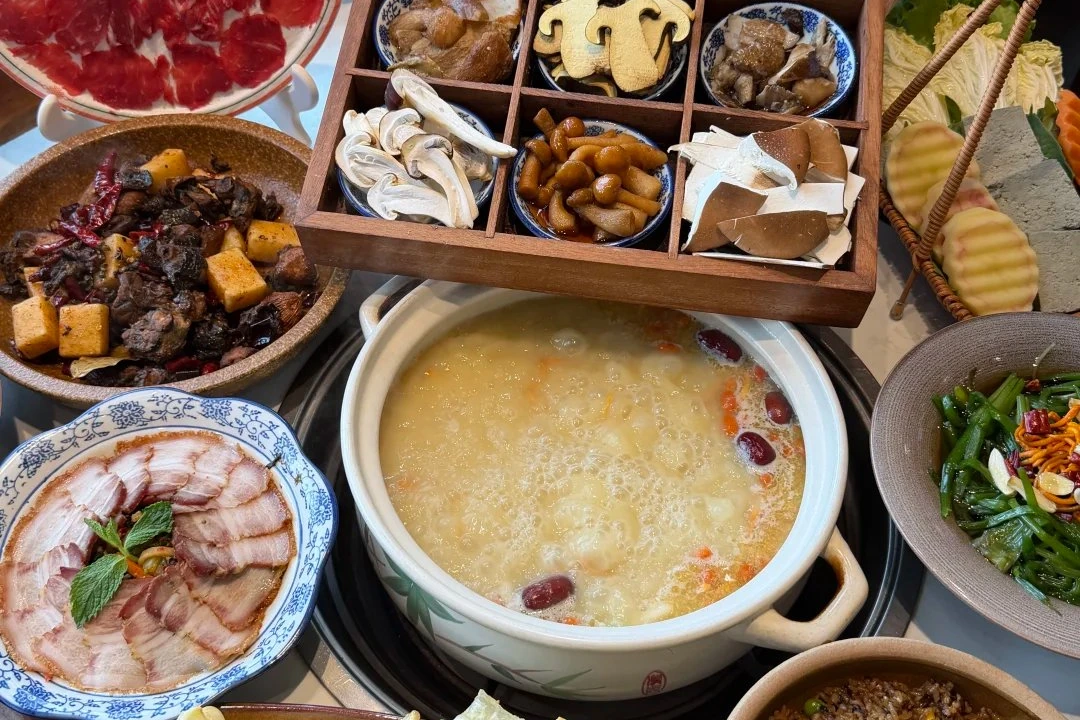
Evening: Dinner on Yunnan wild-mushroom hot pot (peak in summer) or grilled rushan, then a slow walk along the lit-up city wall. If it's a clear night, the Three Pagodas reflection lit against the dark is worth a look.
Day 3: Shuanglang Sunset (East Shore) — or Shaxi
Option A — Shuanglang sunset (recommended for a 3-day trip): Take a scooter, e-bike, or car along the east shore to Shuanglang (双廊), about 50 km from the Ancient Town. The east shore is where Cangshan meets Erhai at golden hour — sit on the wall outside any sea-view guesthouse, order nothing, and watch the sun drop into the lake. On the way, stop at Wase (挖色) or Xiaoputuo (小普陀), a tiny island temple that's a seagull roost in winter. A scooter rental for the day runs about $15–25 (¥100–180); a private car with driver $50–70 (¥350–500). Return to the Ancient Town or stay the night in Shuanglang.

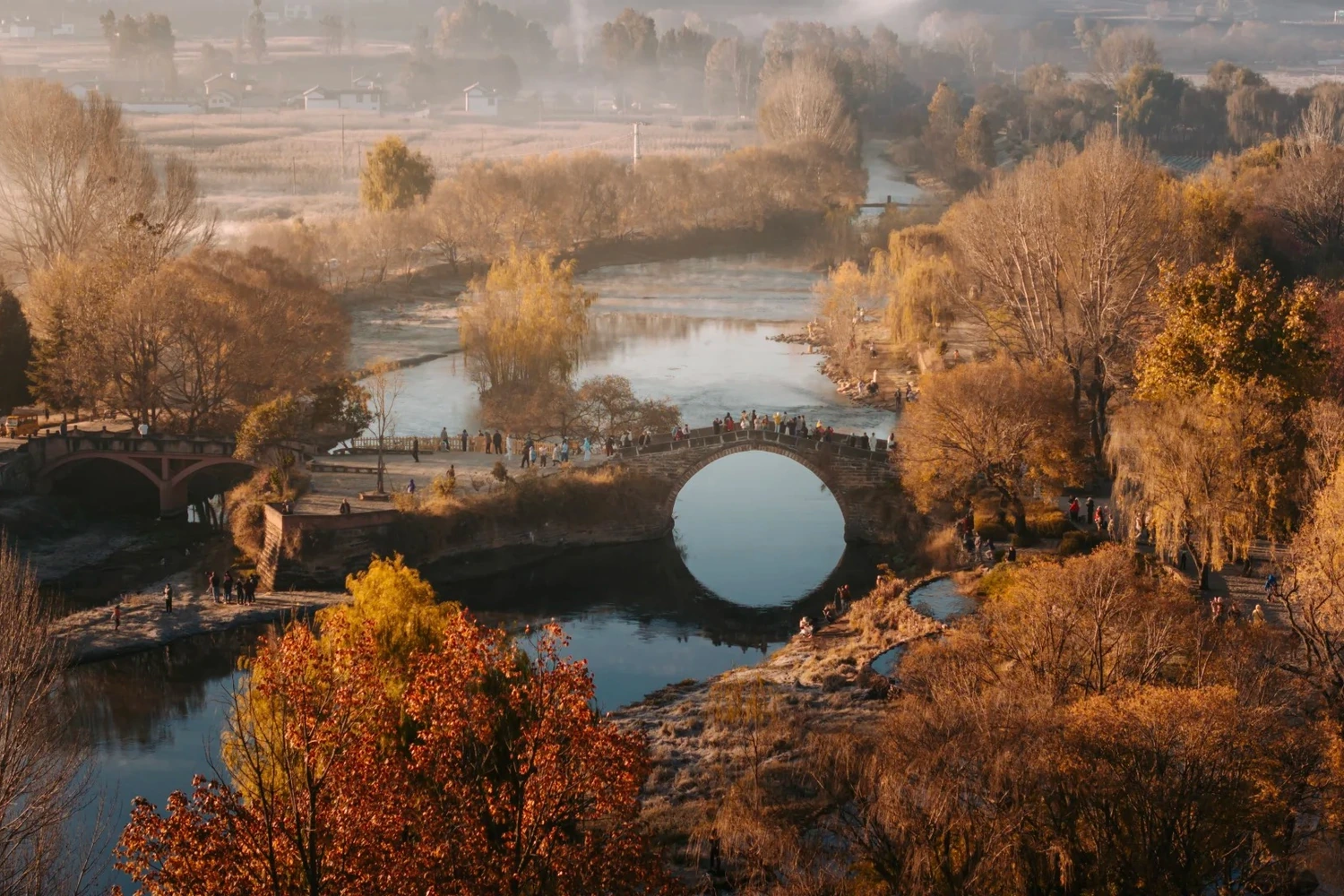
Option B — Shaxi Ancient Town (better as a Day 4–5): If you have an extra day, Shaxi (沙溪) is the only surviving market town on the ancient Tea Horse Road, far quieter than Dali or Lijiang. The town itself is free to enter; a shared car from Dali costs $11–14 (¥80–100) one way and takes about 2 hours. Friday is market day. Don't miss Yujin Bridge at 7 AM, when morning mist and villagers leading horses across the stone arch make the most photogenic scene in Yunnan. Stay one night if you can — after day-trippers leave, Sifang Street goes silent but for footsteps.
Dali Travel Tips
- Budget: A mid-range traveler spends about $28–55 (¥200–390) per day — hotel $17–35 (¥120–250), food $7–11 (¥50–80), local transport $4–9 (¥30–60). Comfortable travelers budget $100–195 (¥720–1,400) with lakeside boutiques and a private car.
- Book Cangshan and the Three Pagodas ahead in peak season (April–October, holidays). The Ximatan cable car in particular sells out and closes on bad-weather days.
- Watch the e-bike rental scams: Always test the brakes and battery, confirm the price and range in writing, and sign a simple agreement before riding. Skip the ¥60 flyers on the main street — book direct or through your guesthouse.
- Sun protection is non-negotiable: Dali's UV at 2,000 m burns fast. Bring high-SPF sunscreen, a hat, and sunglasses; mornings are cool but the midday sun is fierce.
- Pay with Alipay or WeChat Pay: Link your international card before you arrive. Many lakeside stalls and small teahouses are cashless. Carry about $15 (¥100) in cash as backup.
- No visa? Probably fine: Travellers from 48+ countries (UK, EU, Australia, Japan, South Korea and more — not the US) get 30 days visa-free. Kunming is also a 240-hour transit port. See our visa-free guide.
- Pack for two climates: Days are warm, but lake breezes and Cangshan cable cars get cold fast — a light jacket or fleece is essential even in summer.
- Get around with our tools: Use the AI trip planner to combine Dali with Lijiang and Shangri-La, or browse all China destinations to extend your Yunnan loop.